There is a particular kind of tiredness that comes from holidays with a list. Seven beaches, three churches, one sunset bar, a photo of each. Slow travel in Greece starts by putting the list down — and Tinos, with more than forty stone villages and hardly a single "must-see" shouting for attention, is one of the easiest islands to do it on. We live in two of those villages, Dyo Choria and Triantaros, and this is what slow travel actually looks like from our doorstep.
The end of the sightseeing checklist
Nothing here needs ticking off. The event of the day is the light: the way it slides along a row of marble lintels at four in the afternoon, turns a whitewashed wall the colour of honey, and picks out the lattice of a dovecote across the valley. Cycladic architecture rewards the person who stays still — the sun carved over a doorway, the crooked lane built to break the wind, the stone house with walls a metre thick — and none of it is going anywhere. Travel FOMO, the quiet fear of missing the thing everyone else saw, finds no purchase in a village where the most remarkable sight on offer is an open doorway onto a cool stone room.
Switching off, switching on
Put the phone in a drawer — by choice, not by necessity. Mobile data reaches the villages, as we explain in our note on working remotely from Tinos, and we won't pretend otherwise. The point is that once you stop reaching for it, the senses come back one by one. Stone underfoot, worn smooth by centuries of shoes and mules. The sound of water from the spring-fed fountains on the plane-tree square in Dyo Choria. Wood smoke from the chimneys on a cold evening, thyme on a warm hillside, church bells carried across the ravine. None of it is staged, and all of it is louder when the screen is dark.
People, not tourists
In a small village you stop being a tourist faster than you expect. You become the person who comes to the kafeneio every morning, and by the third day somebody nods. A spoon sweet (glyko tou koutaliou, preserved fruit served on a spoon) may appear without being ordered — offering something sweet to a guest is an old Greek courtesy, and the villages still keep it. Conversations happen under the plane trees of the Dyo Choria square, in a mixture of languages and gestures, and the stories are the kind no guidebook prints: whose family owned which dovecote, which spring never ran dry, what the village feast was like before the road arrived. Ask, then listen — that is the whole technique.
The real luxury
Luxury used to mean more: more stars, more staff, more thread count. On Tinos it means less, and better. Horta, the wild greens that grow on the hillsides around our villages, boiled and dressed with olive oil and lemon, at a table where nothing came out of a plastic tray. Kariki, the blue cheese ripened for months inside a sealed gourd, which you will not find in a supermarket — our guide to what to eat on Tinos says where to start. And sleep: real, deep sleep in a stone house, in a village where after eleven there is little noise beyond the wind. With little light pollution away from the port, the night sky over the ridge is the kind city visitors forget exists. None of this can be bought by the hour, which is exactly why it feels like luxury.
How to travel slowly on Tinos
Stay longer than you think you should: a week at the very least, and be suspicious of any plan that moves you on every two nights. Choose a base in the villages rather than the port, so your mornings start on foot. Walk the old mule paths — the Tinos Trails network links villages, chapels and dovecote valleys, and our guide to hiking on Tinos has the routes that begin at our door — and let one walk be the day's only plan. Drive as little as you can, and when you do, have no destination beyond the next village. Then come when the island exhales: Tinos off-season in late autumn, winter and early spring, or the soft weeks of September and October, when the meltemi has dropped, the sea is still warm and the villages belong to the people who live in them. Ferries from Rafina run all year — see how to get to Tinos. Be realistic, too: some places close for the winter and the weather can turn wild, so come for the quiet, not for a beach day.
Where to stay for slow travel on Tinos
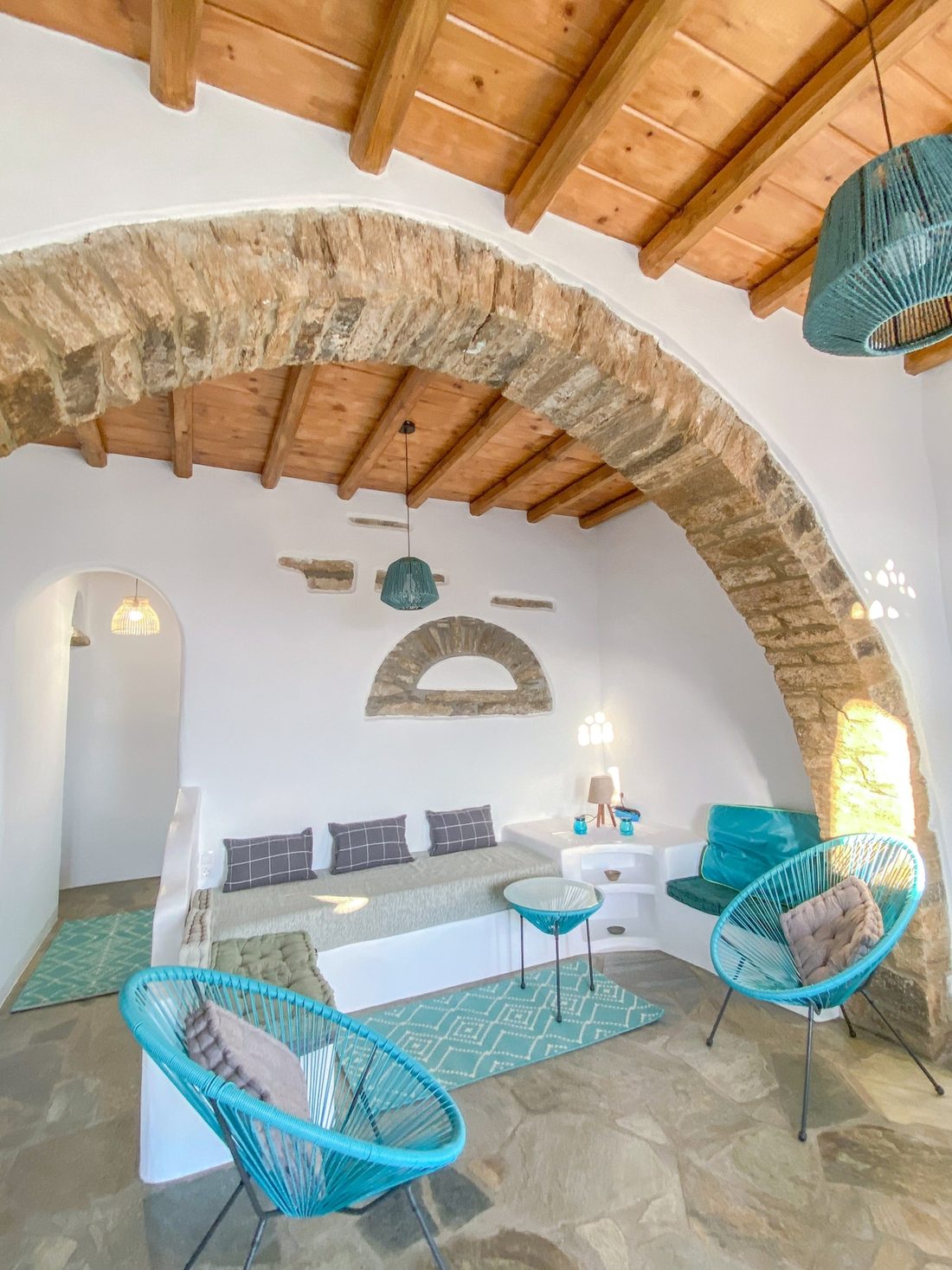
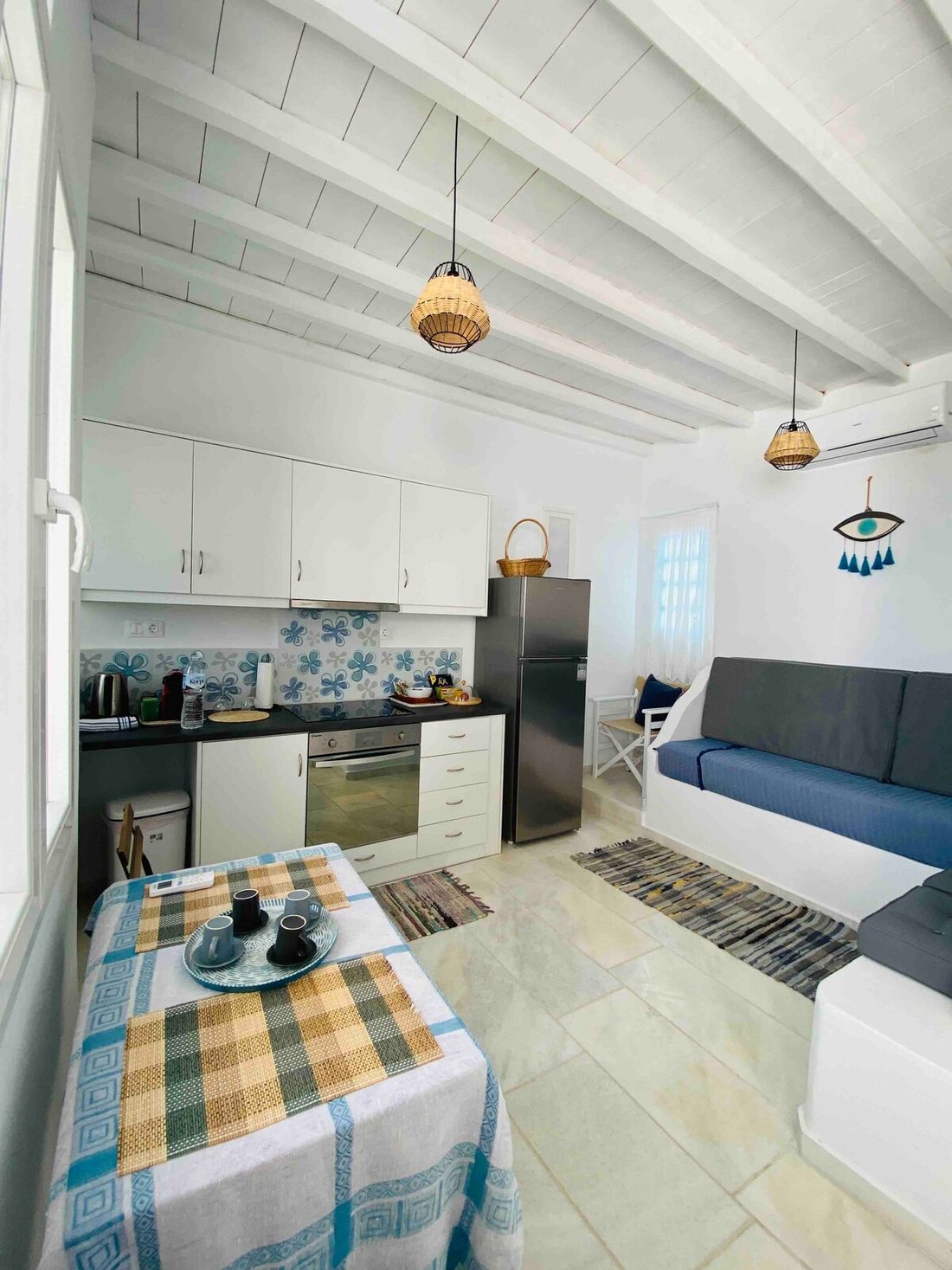
Our four holiday houses sit in Dyo Choria and Triantaros, two balcony villages on the ridge: traditional stone houses with marble thresholds and lintels, renovated into quiet vacation rentals with terraces over the Aegean — a good base if you are deciding where to stay in Tinos for a slower trip. Emerald View House One is two minutes from the plane-tree square; Aegean Selfie House is a couple's terrace above the sea. For the quieter months, message us through the enquiry form with your dates, and we will tell you plainly what each house is like in winter.