Tinos is not an island of water parks and children's clubs, and that is exactly why it works so well for families. Children here get what many islands have lost: space to run across a village square, shallow bays that are not packed, and tavernas that bring bread and olives before anyone has asked. We are hosts who live in the villages above the south coast, so this is how we would plan a family week.
Choose the right beach for small children
Agios Fokas is the family default: long, sandy and shallow, with windbreaks, tavernas and easy parking. Agios Romanos on the west coast is calm and shaded by tamarisk trees, with shallow water that suits a late-afternoon swim. On the north coast, the smaller beach at Kolymbithra, Mikri Ammos, is sheltered, shallow and organised. Our guide to the beaches of Tinos explains the one rule that matters: when the meltemi blows from the north, go to the south and west coasts. Keep the dirt-road beaches such as Livada and Pachia Ammos for older children, since they have no shade, no taverna and no sunbeds.
The villages are the playground
In the balcony villages of Dyo Choria and Triantaros the lanes are for walking, not for cars. In the evening children drift across the square while the adults finish dinner at the kafeneio, which may be the nicest holiday arrangement there is. Two practical notes: the lanes have steps and some terraces open onto the valley, so keep an eye on toddlers, and a baby carrier will serve you better than a pushchair. Children also tend to enjoy the architecture: whitewashed stone houses, marble lintels and blue shutters make a good spotting game.
Easy outings for a hot or windy day
In Pyrgos, the village built from marble, children like the carved fanlights with ships and rosettes above the doors, and the Museum of Marble Crafts, opened in 2021, shows how stone becomes sculpture; read more in our guide to Pyrgos. In the Tarambados valley, the stone dovecotes with their slate patterns make a quick, odd and memorable stop (the story of the dovecotes). For older children who like a climb, Exomvourgo is short but steep, with loose stone and no railings, so it is not a walk for toddlers.
Getting around with a family
A hire car is the simplest way to reach beaches and villages with children and luggage; our guide to getting around Tinos compares the bus, taxis and cars. If you need child seats, ask the rental company when you book. Ferries run to Tinos all year round, and the sea crossing is part of the adventure for most children, as we explain in how to get to Tinos.
A rhythm that suits children
The days that work best here are slow ones: a morning swim before the sun is high, a long lunch, a rest in the house, and the village square in the evening. Greek tables fill late, but children are welcome at any hour, and simple grilled dishes, chips and fresh bread are never a problem. Do not pack the day; one outing is plenty.
Pack for sun and wind rather than for entertainment: hats, reef shoes for rocky entries, a light jacket for the village evenings, and a bag you can carry down a flight of stone steps. Water is the one thing to carry everywhere, and children who have swum all morning will sleep very well at night in a quiet stone house. Late spring and September, when the sea is warm and the island is calm, are our favourite months for families; our guide to Tinos in September explains why.
Where to stay in Tinos with children
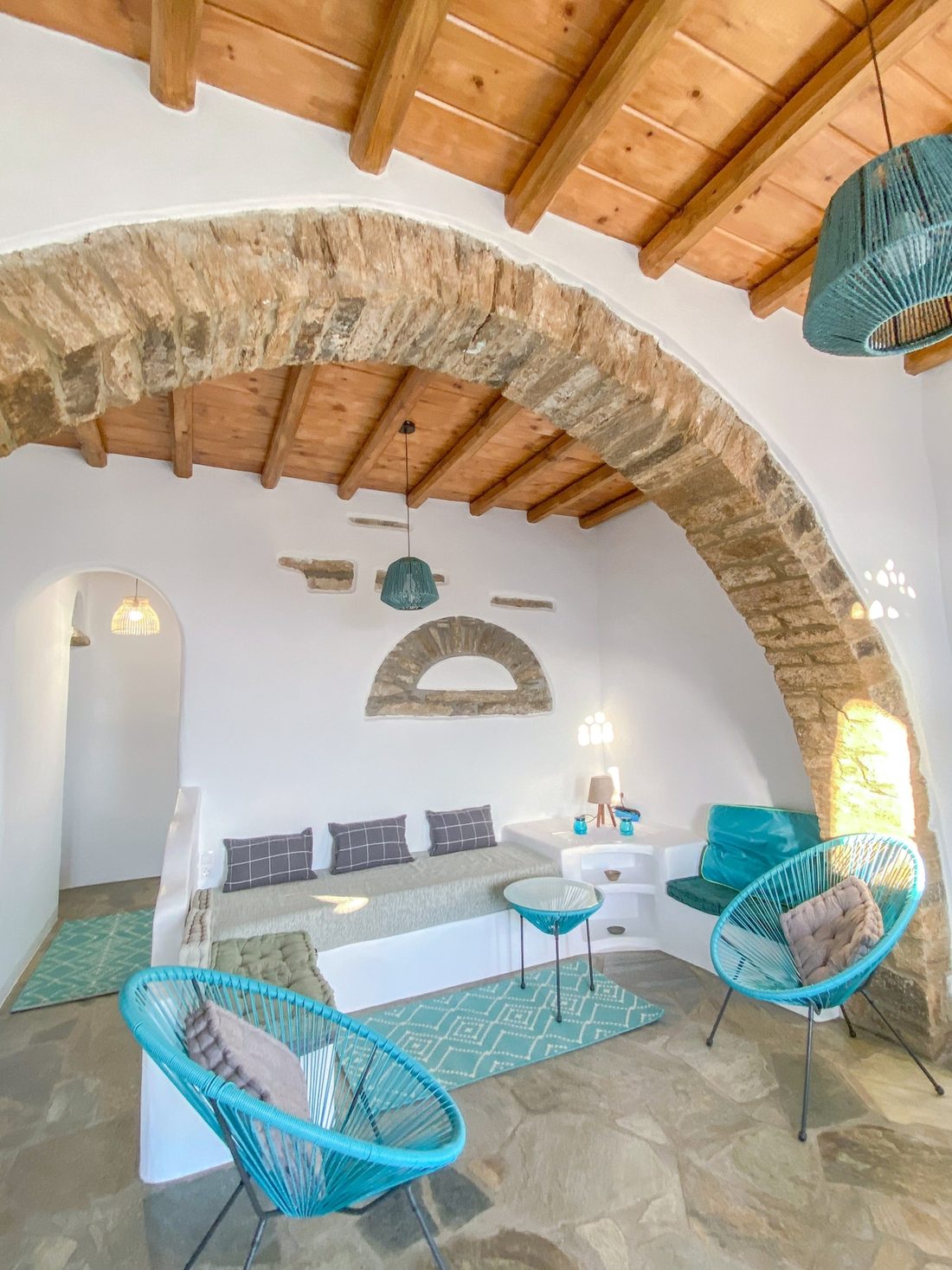
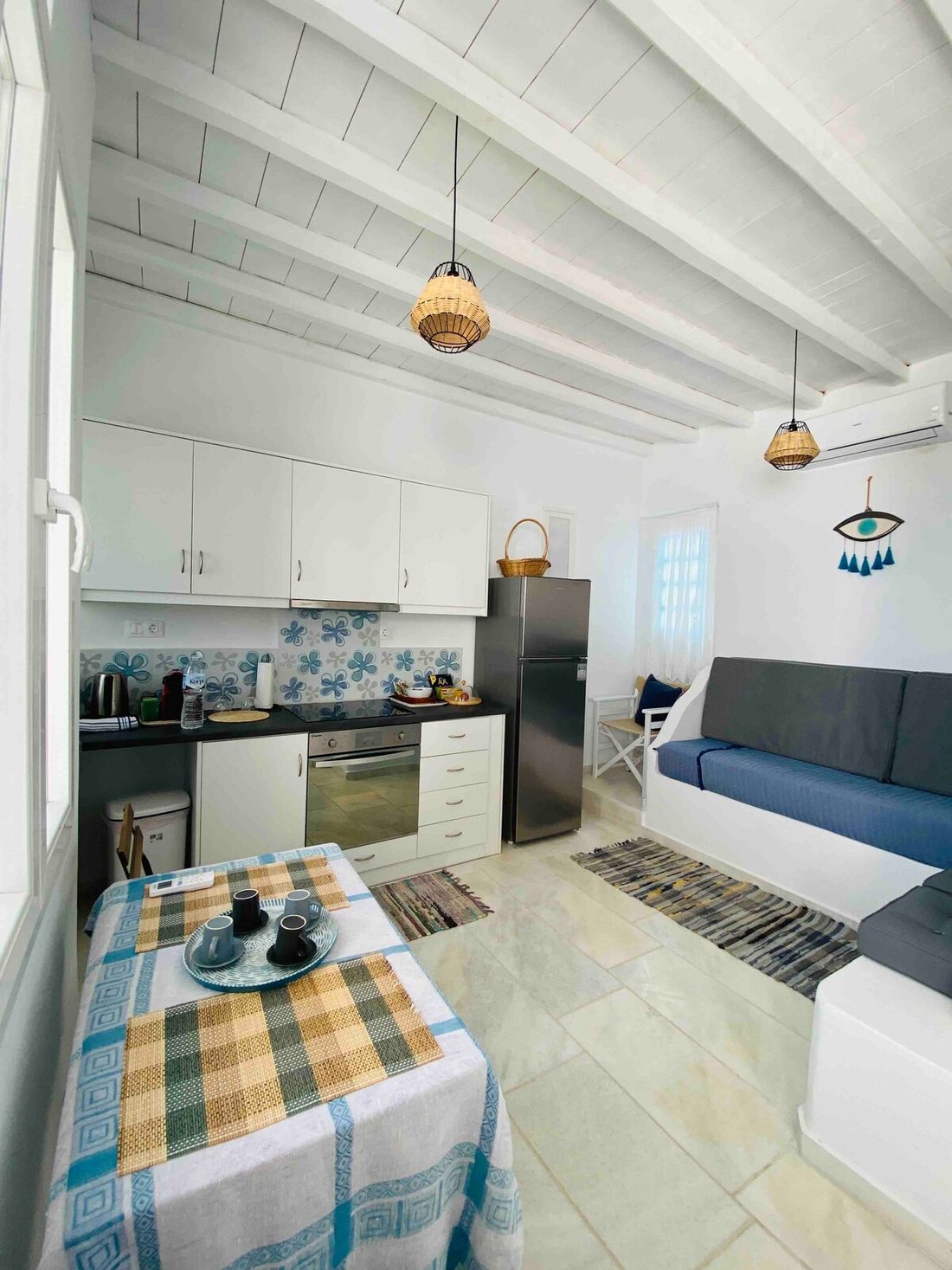
A holiday house gives a family what a hotel room cannot: a terrace for breakfast, room to spread out and a door you can leave open on a warm evening. Blue Horizon has three bedrooms on two levels and suits larger families, while Emerald View House One and Blabla Door House have two bedrooms each. All four of our stone houses, renovated with marble lintels and Cycladic details, stand in Dyo Choria and Triantaros, fifteen to twenty minutes from the southern bays. If you are comparing where to stay in Tinos, message us through the enquiry form with your dates and the children's ages, and we will suggest the best house.